10 Ways To Improve Your Mental Health On Campus
It’s okay to not be okay. With the stress of juggling school, work, clubs, and social life, it can be easy to feel overwhelmed and forget to take care of yourself. If you feel like your mental health needs a boost, try one (or more) of these methods to get yourself back on track.


1. WRITE IT DOWN.
When your mind feels like it’s racing at a million miles an hour, jotting your thoughts down on paper can help you calm your mind and reduce stress. Sometimes, the simple act of writing out your feelings can help you identify issues and solutions that you didn’t even realize were there.2. GET ACTIVE!
Exercise doesn’t just improve your physical health—it has a huge impact on your mental health, too! From improved sleep to reduced anxiety and higher self-esteem, the mental health benefits of physical activity are endless. Hit one of our gyms conveniently located on campus or attend a group fitness class with your friends to improve your mood and get those endorphins . Even small changes, like walking to class instead of taking the bus, can be a great way to incorporate physical activity into your daily routine.Photo by Bryce Richter / UW–Madison
3. PHONE A FRIEND.
It might be easy to hold in your feelings of depression or anxiety, but sharing your mental health concerns with a trusted friend can help take the pressure off of yourself and start an honest conversation. Talking about your experience openly can decrease the stigma surrounding mental health, and give others insight on how they can help. Even if you don’t feel comfortable sharing your feelings, just spending time with your friends and family can alleviate some of your pain and improve your mood tremendously. Surrounding yourself with people that care about you is a great way to remind yourself that you are valued and loved.4. ADD SOME “OM.”
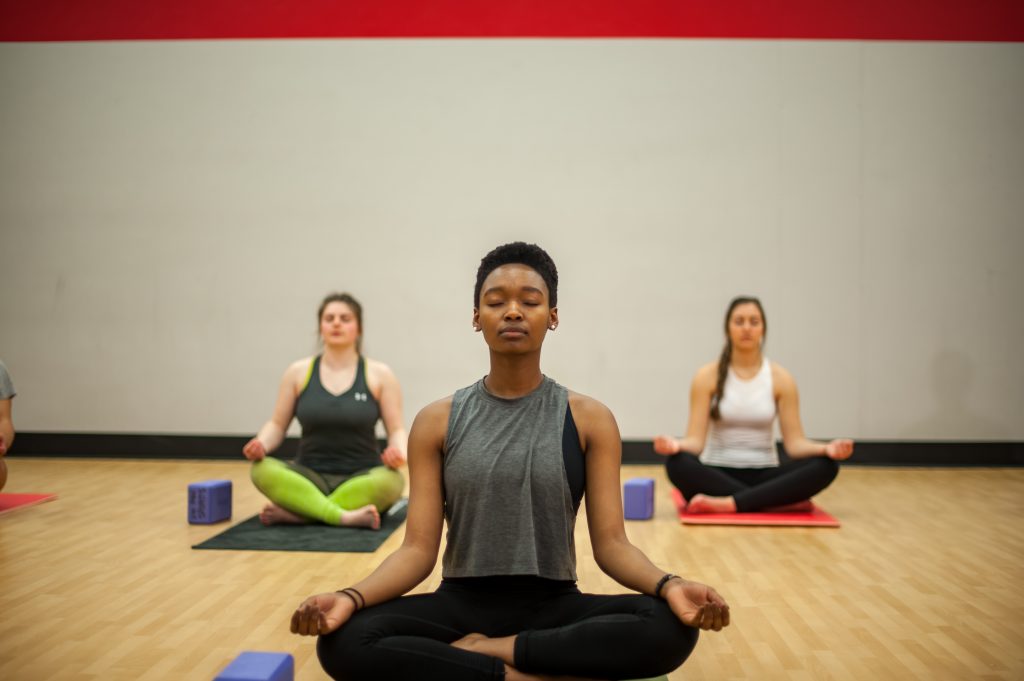
Meditation is not just for die-hard yogis—anyone can practice meditation and mindfulness to live a happier life. There are a ton of mobile apps and meditation offerings at UHS for beginners that will guide you through meditative exercises in order to relieve your mind from stress and intrusive thoughts. Unplugged, a new class that will be taught at the Nicholas Recreation Center, is a great option for students who want to step away from the hustle of everyday life and practice breath work, light movement, meditation, and relaxation. Effective meditation takes practice, but it’s well worth the work, and even one meditation session can make you feel calmer and more relaxed. Dedicating 5 minutes to practice mindfulness a few times per week can do wonders for your mental health and help you relax after a stressful day.
5. DO SOME GOOD.
If you’re feeling down, the truth is: you’re not alone. Chances are, there are people all around you dealing with anxiety, depression, and a wide range of mental health issues. Doing something good—whether it be volunteering, paying it forward, or performing a random act of kindness for a friend—can help you be a part of something larger than yourself, and will go a long way for boosting someone else’s mood, and in turn, improving your own self-esteem.6. TAKE A BREAK.
Between attending classes, studying for exams, participating in extracurricular activities, and maintaining a social life, relaxation is usually at the bottom of a college student’s to-do list. But taking time for yourself is vital for maintaining positive mental health and avoid feeling burnt out. Set aside 30 minutes each day to unwind—whether that means listening to your favorite music, taking a well-deserved nap, or going on a walk to clear your mind.7. FUEL YOUR BODY.
While you may feel like stress-eating all of the potato chips in your dorm room after a long day, it will only leave you feeling undernourished and unsatisfied. Food is fuel for your body, and nutrient-packed meals will help keep you energetic and alert throughout the day. Opt for healthy options and try to eat full meals in order to feel the biggest boost in your mental health. When your schedule gets hectic, try planning out your meals and snacks ahead of time so it’s easier to fuel your body well.Photo by Board of Regents of the University of Wisconsin System